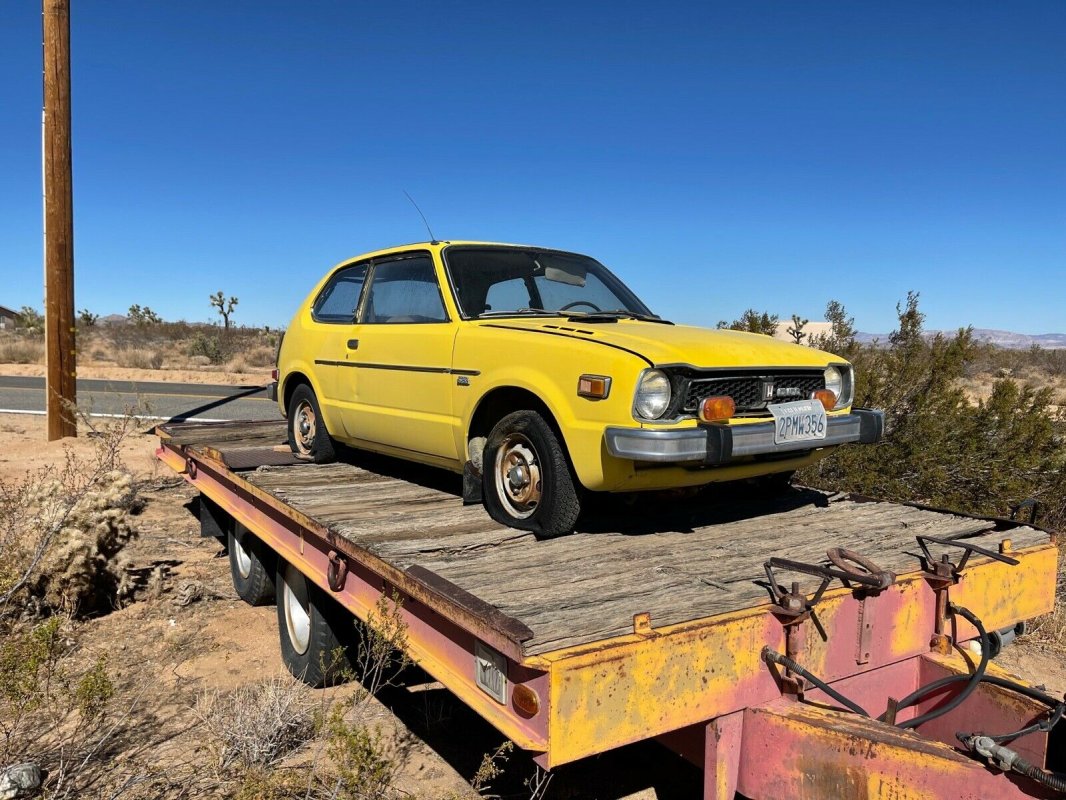
Ah, your first car. I still remember mine - a 1998 Honda Civic with more rattles than a baby's toy box and a driver's door that only opened if you lifted and pulled at the same time while saying a small prayer. I bought it for $1,500 from a guy named Chuck who assured me it "ran like a dream." Chuck failed to mention it was more like a nightmare where you're being chased by repair bills.
But you know what? I loved that rusty bucket. It taught me everything about cars - mostly what sounds meant "expensive repair incoming" and how to explain to dates why they needed to climb in from the passenger side. More importantly, it taught me what actually matters in a first car, lessons I'm about to save you from learning the hard way.
So whether you're a teenager finally escaping the parental taxi service, a college student tired of begging for rides, or just someone who's been putting off adulting and finally needs wheels, let's talk about first cars that won't leave you eating ramen for the next five years.
The Truth About First Cars (That Nobody Tells You)
Before we dive into specific models, let's get real about what you actually need in a first car. Spoiler alert: It's not what you think.
You think you want: Something fast, flashy, and guaranteed to impress at the Sonic drive-thru.
You actually need: Something that starts every morning and won't bankrupt you when it inevitably meets a parking lot pole.
You think you want: A V8 muscle car that announces your arrival three blocks away.
You actually need: Something that won't cost $100 to fill up or require premium gas like it's too good for regular unleaded.
You think you want: Every tech feature known to mankind.
You actually need: Bluetooth for music and maybe a backup camera so you don't recreate my "garage door incident of 2003."
Now, I'm not a mechanic, but... I've learned that the best first car is boring in all the right ways. It should be like a golden retriever - reliable, friendly, doesn't need constant attention, and won't surprise you with expensive problems.
The Honda Civic (2006-2015): The Immortal Cockroach of Cars
I know, I know. Starting with the Civic is like recommending water when someone asks for a drink recommendation. But there's a reason every "best first car" list includes the Civic - this thing simply refuses to die.
My nephew bought a 2008 Civic with 150,000 miles for $4,500. That was three years ago. He's added another 60,000 miles, and the only thing he's replaced besides oil and tires was a $30 cabin air filter. Meanwhile, his buddy with the "cooler" used BMW has spent more on repairs than my nephew paid for the entire car.
Why it's perfect for first-timers:
- Parts are everywhere and cheap (YouTube University can teach you most repairs)
- Gets 35+ MPG highway (your gas money can go to literally anything else)
- Insurance companies don't hate it (unlike anything remotely sporty)
- Holds its value better than my cryptocurrency portfolio
- The 2006-2011 are bulletproof, the 2012-2015 are nicer inside
What to watch for:
- Check the A/C (replacing it costs more than you'd think)
- 2006-2009 had some paint issues (clearcoat peeling)
- Make sure it has a clean title - run that VIN through carvins.net for $5 before you buy
The Toyota Corolla (2009-2013): When You Need Maximum Boring
If the Civic is the cockroach of cars, the Corolla is the tortoise - slow, steady, and will outlive us all. This car is so boring it makes watching paint dry look like an action movie. And that's EXACTLY why it's perfect.
True story: My sister's 2010 Corolla has 240,000 miles and has needed exactly three repairs in eight years. Three. My "fun" car needed three repairs last month. The Corolla just keeps going, asking for nothing but oil changes and the occasional pat on the dashboard.
Why it works:
- Toyota reliability is legendary (and actually true)
- Cheap to insure (insurance companies know these don't get wrapped around trees)
- Practical size (big enough for friends, small enough to park)
- Resale value stays strong (future you will thank current you)
- 2009-2013 sweet spot of reliability meets modern features
The downside:
You will never look cool in a Corolla. Ever. But you'll look a lot cooler than the person waiting for AAA on the side of the highway.
The Mazda3 (2010-2013): The Fun One That Won't Break
Okay, so you want something with a pulse. I get it. The Mazda3 is what happens when engineers decide to make a reliable car that's actually enjoyable to drive. It's like finding out your accountant friend is secretly a DJ on weekends.
I recommended a 2012 Mazda3 to my cousin who "needed something reliable but refused to drive something boring." Two years later, he still sends me thank you texts. It's been dead reliable, looks good, and handles like it thinks it's a sports car. Plus, that 2.0L engine is basically indestructible if you just change the oil.
Why it's the sweet spot:
- Actually fun to drive (for a normal car)
- Reliable as gravity
- Looks good without screaming "pull me over"
- Hatchback version is stupidly practical
- Won't punish you at the pump
Watch out for:
- Rust in salt states (check the wheel wells)
- Some 2010-2011 had dashboard cracking issues
- Make sure it's been maintained - these engines are tough but not neglect-proof
The Ford Focus (2012-2014): The Dark Horse
Wait, hear me out before you close this tab. Yes, some Focus models had transmission issues. BUT - and this is important - the manual transmission versions are absolutely bulletproof and stupid cheap because everyone's scared of the automatics.
My neighbor's kid got a 2013 Focus manual for $3,500. Three. Five. Hundred. For a car that looks modern, has decent tech, and gets 40 MPG highway. Sure, he had to learn to drive stick, but that's a life skill anyway. Plus, nobody asks to borrow your car when it's a manual.
Why it's worth considering:
- Manuals are reliable AND cheap
- Great fuel economy
- Surprisingly fun to drive
- Modern features for the price
- Insurance is cheap (it's still just a Focus)
The catch:
DO NOT buy an automatic 2012-2016 Focus. Just don't. The PowerShift transmission was Satan's gift to mechanics everywhere. Manual only for these years, or look elsewhere.
The Nissan Versa (2010-2012): When Your Budget Is "Whatever's in the Couch Cushions"
Look, the Versa isn't going to win any awards. It's not fast, it's not pretty, and it has all the personality of a filing cabinet. But if your budget is tighter than my jeans after Thanksgiving, the 2010-2012 Versa is transportation that won't let you down.
These things depreciated harder than my faith in humanity, which means you can find them CHEAP. Like, "costs less than a decent bicycle" cheap. And the 1.8L engine models are actually reliable if you avoid the CVT transmission versions.
Why it makes the list:
- Stupidly cheap to buy
- Even cheaper to insure
- Decent room inside (it's bigger than it looks)
- Simple enough that repairs won't kill you
- Nobody will ever ask to borrow it
Important note:
Stick to 2010-2012 with the regular automatic. The later CVT versions are reliability nightmares. Also, always get a pre-purchase inspection. A $100 inspection can save you from a $3,000 mistake.
The Honda Fit (2009-2014): The Tardis of Cars
The Fit is magic. It looks tiny from the outside but somehow fits more stuff than cars twice its size. It's like Honda engineers were playing Tetris and decided to make a car. I helped my friend move apartments using just a Fit. We fit a couch in there. A COUCH.
Plus, these things are reliable as sunrise and fun to drive in that "slow car fast" way. You can drive it like you stole it and still get 38 MPG. Try that in literally any other car.
Why it's genius:
- Reliability that borders on supernatural
- Space that defies physics
- Fuel economy that makes Prius owners jealous
- Surprisingly fun to drive
- Parks anywhere (seriously, ANY where)
The only downside:
Highway driving can be... loud. It's not bad, but it's definitely not a luxury cruiser. Think of it as free white noise.
The First Car Buying Checklist (Print This Out, Seriously)
Before you buy ANY first car:
✓ Run a history report - Carvins.net, $5, no excuses. That "minor fender bender" might be "major frame damage"
✓ Get a pre-purchase inspection - $100-150 that can save you thousands
✓ Check insurance costs FIRST - That sporty car might cost more to insure than to buy
✓ Test drive everything - Bad clutch, weird transmission, suspension issues all show up here
✓ Check for recalls - NHTSA.gov, free, takes 2 minutes
✓ Bring a car friend - We all have one. Buy them lunch. It's worth it
✓ Don't get emotional - There's always another car. Always.
✓ Budget for repairs - Even reliable cars need maintenance. Budget $1,000/year minimum
✓ Check tire dates - Old tires are dangerous, even with good tread
✓ Verify title status - Clean title only for your first car. Trust me.
The First Cars to AVOID (Learn From My Pain)
Quick hit list of first car disasters:
Any used luxury car - That $5,000 BMW will cost $10,000 in repairs. Ask me how I know.
Anything with a salvage title - Not for your first car. Just... no.
High-mileage turbos - Turbos are fun until they're expensive
Chrysler anything from 2000-2010 - Sorry, it's just true
Modified cars - Someone else's project is your nightmare
Anything that needs "just a minor fix" - It's never minor
The Money Talk (Because Nobody Else Will Have It With You)
Real talk about first car budgets:
$3,000-5,000: This is the sweet spot for reliable, boring transportation. Civic, Corolla, maybe an older Mazda3. You won't look cool, but you'll get there.
$5,000-8,000: Now you can be pickier. Lower mileage, better condition, maybe even some features like Bluetooth. This is where you find the cream of the crop first cars.
$8,000-12,000: Honestly? Save some of this for insurance and repairs. A $6,000 car with $4,000 in the bank beats a $10,000 car with empty pockets every time.
Remember: Insurance for young drivers is EXPENSIVE. That cool Mustang might be $400/month to insure. The boring Corolla? Maybe $150. Do the math.
The Bottom Line on First Cars
Your first car isn't your dream car. It's your freedom machine, your responsibility teacher, and your introduction to the expensive world of car ownership. Make it a good introduction, not a traumatic one.
Get something reliable, safe, and cheap to run. Save the cool cars for when you're not eating cereal for dinner to afford gas. Trust me, driving a boring car that always starts beats walking past a broken cool car every single day.
And remember - every gearhead started somewhere. My rusty Civic with the broken door handle taught me more about cars than any YouTube video ever could. Your boring-but-reliable first car is just the beginning of your automotive journey. Make it a good beginning.
Stay safe out there, change your oil, and whatever you do, don't buy that V6 Mustang your buddy is selling. It's not as cool as he says it is, and the insurance will make you cry.
- JT
P.S. - To young me who thought that rusty Civic was embarrassing: That car took you everywhere, never left you stranded, and cost less to run than your monthly coffee budget. You should have appreciated it more. Also, you should have fixed that door handle. It was like $12 at the junkyard, you lazy punk.