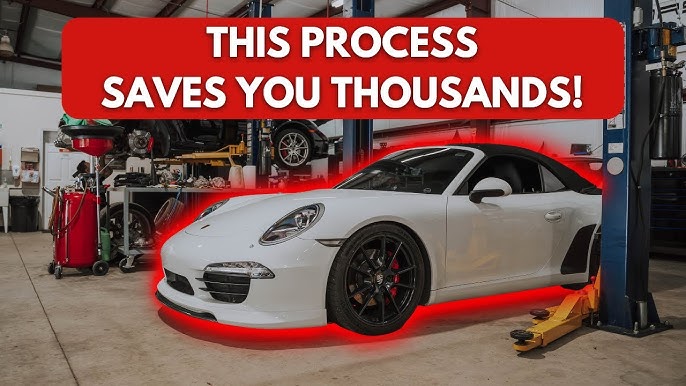
Hey folks, James here. Let me tell you a story. A few years back, a buddy of mine was about to buy this gorgeous used convertible. Low miles, gleaming paint, looked like it had spent its whole life in a climate-controlled garage. He was head-over-heels. But he had that little twitch in his gut, that "somethin' ain't right" feeling. So he called me. We took it to my old shop, got it up on the lift, and... oh boy. The undercarriage was a horror show of rust and silt. Turns out, that beauty had gone for a swim in a flood. The seller had cleaned it up perfectly on the outside, but underneath, it was a ticking time bomb of electrical gremlins and corrosion.[10, 11]
I've spent 15 years with grease under my fingernails, and I can tell you that story isn't unique. A pretty paint job can hide a whole mess of trouble. That’s why the single most important thing you can do when buying a used car is a **Pre-Purchase Inspection (PPI)**. It's not just kicking the tires; it's a deep-dive investigation to make sure you're buying a solid ride, not inheriting someone else's nightmare. And it's a two-part process: you start with the paperwork, then you get your hands dirty. So grab a coffee, and let's walk through how to do this right.

Step 1: The Pre-Flight Check – Don't Even Leave Your Couch Yet
Before you waste your time driving across town, you need to do some recon. Think of a **Vehicle History Report (VHR)** as the car's permanent record, its diary, or maybe its rap sheet.[2] This piece of paper can save you from falling for a car with a dark past. You wouldn't hire someone without checking their resume, right? Same principle.
The VHR digs up the dirt that a seller might not know about, or might not want you to know about. We're talking about the big, scary deal-breakers:
- Title Brands: This is the first thing you look for. Words like "Salvage," "Rebuilt," "Flood," or "Lemon" are HUGE red flags. A **Salvage** title means an insurance company declared the car a total loss—it was wrecked so badly they said, "Nope, not worth fixin'".[9] A **Rebuilt** title means someone bought that salvaged wreck, patched it up, and got it approved by the state to be road-legal again.[12, 13] But that scar is permanent. The car's value is toast, and getting full insurance coverage can be a nightmare. Unless you're a pro looking for a project, you should run from a branded title.
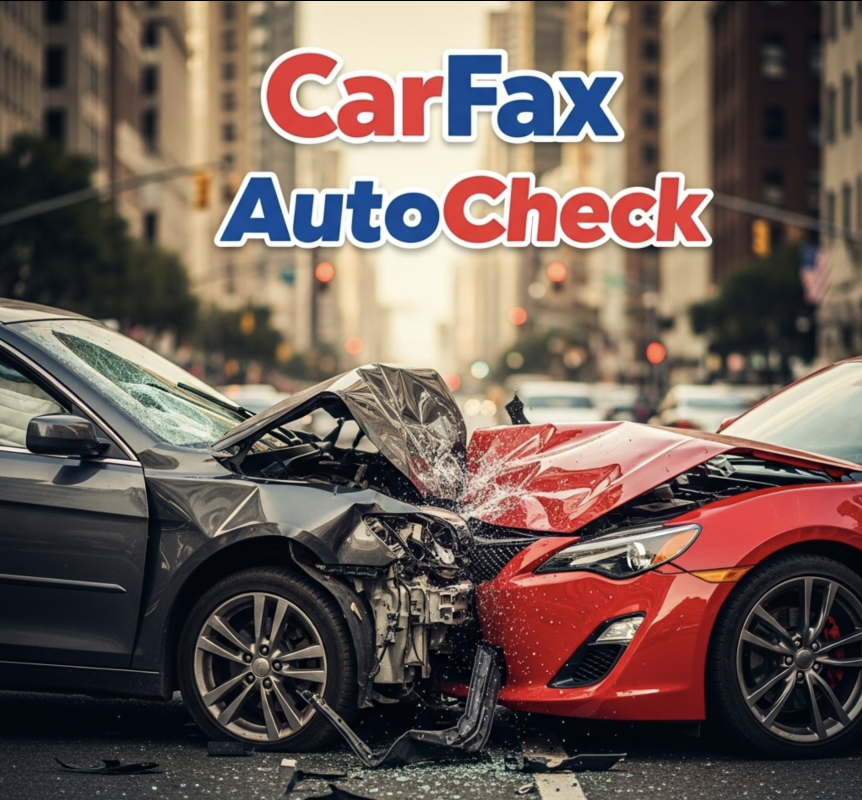
- Major Accidents: The report will list reported accidents, and you need to look for keywords like "structural damage" or "airbag deployment".[6] That means the car was in a serious CRUNCH, and its frame—the very skeleton of the car—could be compromised. It might never drive straight again.
- Odometer Rollback: The VHR tracks mileage at different points in the car's life (inspections, service, etc.). If you see the mileage go *down* at any point, that's a sign of fraud, plain and simple.[14]
Here's the simple logic: why would you spend $200 on a mechanic's inspection when a report could tell you from your kitchen table that the car is a lemon? It's the smartest money you can spend first. A **cheap Carfax report** or a **cheap AutoCheck report** is your first line of defense. My go-to recommendation for folks is a site like **Carvins.net**. You can **buy a Carfax report instantly** and get the facts before you get emotionally invested. Sometimes it's even worth getting a **Carfax AutoCheck bundle**, because one service might have auction data the other missed.[5]

Step 2: Playing Detective – Your Own 30-Minute Walk-Around
Alright, the VHR came back clean. Now it's time to go see the car in person. This is your chance to see if the car's physical condition matches its story on paper. You don't have to be a master mechanic for this part, you just need to use your eyes, hands, and nose.
The Exterior Walk-Around
Circle the car slowly. Don't just glance at it. Get down low and look along the body lines.
- Body and Paint: Look for panels that don't quite line up or have uneven gaps. This can be a sign of a shoddy repair job.[8] Is the paint color slightly different from one panel to another? That's a dead giveaway it's been repainted.[15] A little trick I use: take a small refrigerator magnet. If it doesn't stick to a certain spot on a steel body panel, it's likely because there's a thick layer of body filler (Bondo) underneath, hiding a dent.
- Tires: The tires tell a story. Is the tread worn down on the inside or outside edges? That points to alignment problems, which could be caused by worn suspension parts or even frame damage.[16] Use a penny: stick it in the tread with Lincoln's head upside down. If you can see the top of his head, the tires are shot.
- Glass and Lights: Check every window for cracks or large chips. Have a friend help you test every single light: headlights (low and high beams), turn signals, brake lights, and reverse lights.[8] A blown bulb is a cheap fix, but if multiple lights are out, it could hint at bigger electrical issues.
The Interior Deep-Dive
Now, open the door and take a deep breath.
- The Sniff Test: Your nose is one of your best tools. Does it smell musty, damp, or like mildew? That's a classic sign of water damage.[11, 17] If it smells overwhelmingly of air freshener, the seller might be trying to mask that exact smell.
- Look for Water Evidence: Pull up the floor mats. Are the carpets underneath damp or do they have water stains? Pop the trunk and lift the carpet or liner. Check the spare tire well for rust, silt, or moisture.[11] Water gets into places you wouldn't think to look.
- Electronics Gauntlet: Sit in the driver's seat and test EVERYTHING. Turn on the A/C and the heat. Test the radio, the power windows, the power locks, the sunroof, the heated seats. Fiddle with every knob and button. Electrical problems can be a real nightmare to chase down and fix.[7]
- Wear vs. Mileage: Look at the things the driver touches most: the steering wheel, the brake and gas pedals, and the driver's seat. If the car's odometer says 40,000 miles but the steering wheel is worn smooth and the pedal rubber is gone, your alarm bells should be screaming. It's a potential sign of an **odometer rollback**.[14]
Under the Hood (Engine Off!)
You don't need to be an expert here, just look for the obvious.
- Check the Fluids: Pull the engine oil dipstick. The oil should be brownish-black. If it looks milky, like a coffee milkshake, that means water or coolant is mixing with the oil—a sign of a VERY expensive problem like a blown head gasket.[8] Check the transmission fluid (on most cars, you do this with the engine running, so check the manual). It should be reddish-pink and not smell burnt.
- Belts and Hoses: Gently squeeze the black rubber hoses. They should feel firm but pliable, not rock-hard, brittle, or mushy.[2] Look for cracks in the visible belts.
- Look for Leaks: Scan the engine bay for any signs of active leaks—wet spots of oil, coolant (usually green or orange), or other fluids.
Step 3: The Moment of Truth – Calling in the Pros
Okay, you've done your homework. The VHR looks good, and your own inspection didn't turn up any major red flags. Now for the most important step of all: taking it to an **independent mechanic** for a professional PPI. I don't care how good a car looks or how nice the seller is. DO. NOT. SKIP. THIS. STEP.
Why an independent mechanic? Because they work for YOU, not the seller. Using the dealership's mechanic is like letting the other team's coach referee the game. Find a local shop with good reviews, preferably one that specializes in the brand of car you're looking at.[18] If a seller gives you any grief about taking it for an inspection, WALK AWAY. FAST. They are absolutely hiding something.
A professional PPI is like giving the car a full physical and an MRI. The mechanic will:
- Put it on a Lift: This is where the real secrets are revealed. They'll inspect the frame for any cracks or non-factory welds, which are signs of major accident repair. They'll check the suspension, the exhaust system for leaks, and look for hidden rust that you can't see from above.[7, 8]
- Scan the Computer: They'll plug a professional-grade scanner into the car's computer. This can pull up "pending" or "historic" trouble codes that the seller might have cleared to turn off the check engine light just before you arrived.[19]
- Perform a Real Test Drive: A mechanic's test drive is different. They're listening for specific sounds—a hum from a bad wheel bearing, a clunk from a worn-out suspension joint, a slip in the transmission—that an average driver would probably miss.[7]
After the inspection, the mechanic will give you a full report on the car's health and, just as importantly, a written estimate for any repairs it needs. That estimate is your single most powerful negotiation tool.

Conclusion: Your Go/No-Go Decision
So, you've got the VHR and the mechanic's report. Now you can make a smart decision, not an emotional one. If the reports showed a salvage title or frame damage, the decision is easy: you walk away. If it needs new tires and brakes, you can now negotiate with the seller. "The car is great, but your asking price is for a car that doesn't need $800 in brake work. Let's adjust the price to reflect that."
Buying a used car can feel like a gamble, but by following these steps, you take the luck out of it. You're not just a buyer anymore; you're an informed investor. You've done the work to protect yourself, and now you can buy with confidence, knowing exactly what you're getting. That peace of mind is priceless.
Ready to Start Your Hunt?
Before you even kick a single tire, do the smart thing. Get the car's whole story. I tell all my friends to start at Carvins.net. You can buy a cheap Carfax report instantly, or get a cheap AutoCheck report right now. For a few extra bucks, the Carfax AutoCheck bundle is great for being extra sure. They offer a sample report so you know what you're getting, a money-back guarantee, and secure payment options. It's the cheapest insurance you'll ever buy against a four-wheeled money pit. Get your official, instant, and affordable Carfax or AutoCheck report today at Carvins.net and drive forward with confidence!